
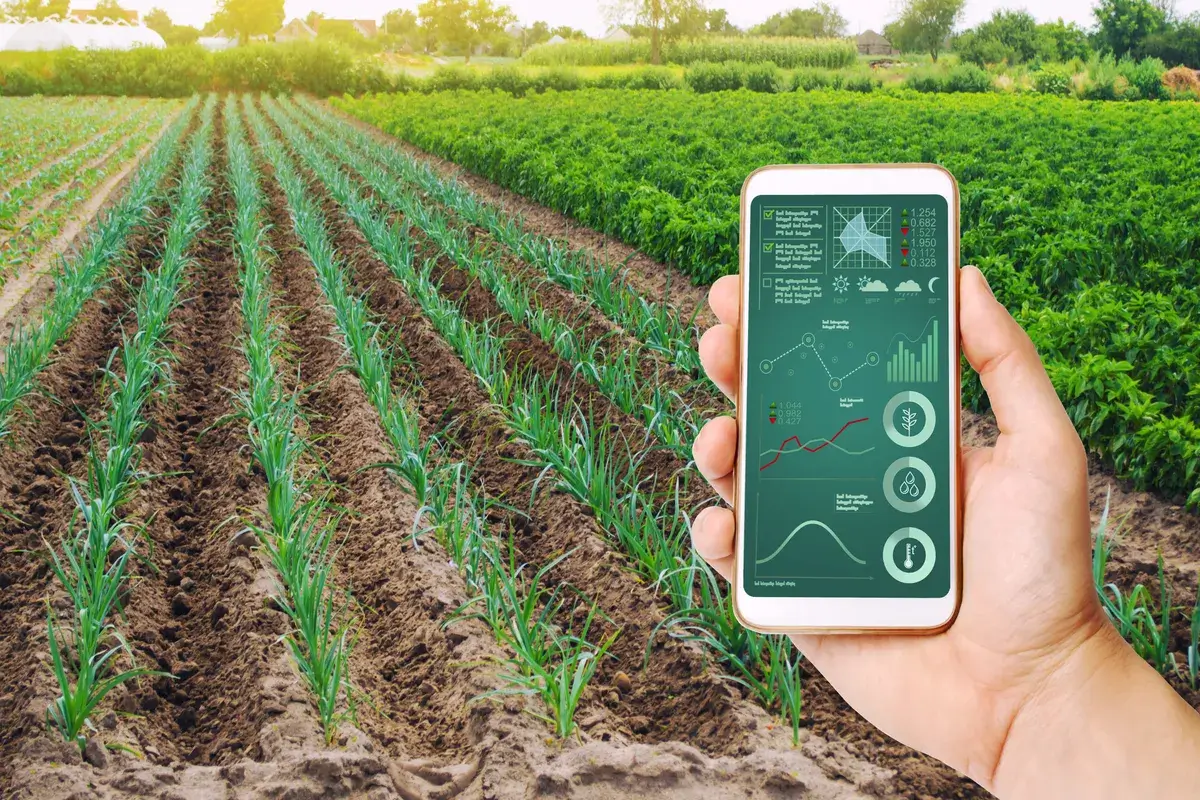
For centuries, farmers have been “plant whisperers,” relying on experience to judge if a leaf looks too dry or a stem too pale. In 2026, the guesswork is over. Thanks to IoT (Internet of Things) sensors, plants can now “text” a farmer’s smartphone the moment they feel thirsty or malnourished.
This real-time dialogue is transforming agriculture from a game of averages into a science of specifics.
1. The Nervous System of the Farm: How it Works
IoT sensors act as an artificial nervous system spread across thousands of acres. These small, low-power devices are buried in the soil or attached to stems to monitor vital signs:
- Volumetric Water Content (VWC): Measures the exact percentage of water in the root zone.
- EC Sensors (Electrical Conductivity): These detect the concentration of salts and nutrients (like Nitrogen, Phosphorus, and Potassium) in the soil.
- Sap Flow Sensors: These “wearables for plants” measure the speed at which water moves through the stem, indicating the plant’s actual metabolic stress.
2. From Soil to Cloud: The Alert System
When a sensor detects that moisture levels have dropped below a specific threshold (determined by the plant’s growth stage), the process is instantaneous:
- Data Transmission: The sensor sends a signal via LoRaWAN or 5G to a central gateway.
- AI Analysis: The cloud-based AI compares the data with the upcoming weather forecast. (If rain is expected in two hours, it might cancel the alert to save water).
- The Notification: The farmer receives a push notification: “Block B – Almond Trees: Water potential critical. Initiation of irrigation recommended.”
“We’ve moved from irrigating on a schedule to irrigating on demand. The plants are finally in charge of their own resources.” — Agricultural Technologist, 2026.
3. The “Digital Twin” of the Field
By 2026, IoT data is used to create a Digital Twin—a virtual model of the physical farm. This allows farmers to:
- Predict Stress: See a “heat map” of where nutrients are leaching before the plants show physical signs of yellowing.
- Automate Fertigation: In many smart farms, the sensor doesn’t just alert the farmer; it talks directly to the irrigation pump, which automatically mixes the exact dose of liquid nutrients and delivers it to the specific row in need.
4. Massive Sustainability Gains
The impact of plants “talking” to our phones goes far beyond convenience:
| Resource | Savings with IoT | Why? |
| Water | Up to 40% | Eliminates over-watering and runoff. |
| Fertilizer | Up to 25% | Prevents nutrient leaching and optimizes uptake. |
| Energy | Significant | Pumps run only when necessary, reducing electricity costs. |
The Future: Plants That Pre-empt the Market
As we look toward the end of the decade, these IoT systems are being integrated with market data. Imagine a plant telling your phone: “I’m growing faster than expected; I’ll be ready for harvest 4 days early. Should I notify the distributor?” The era of the connected crop is here, ensuring that we never waste a drop of water or a gram of fertilizer again.