
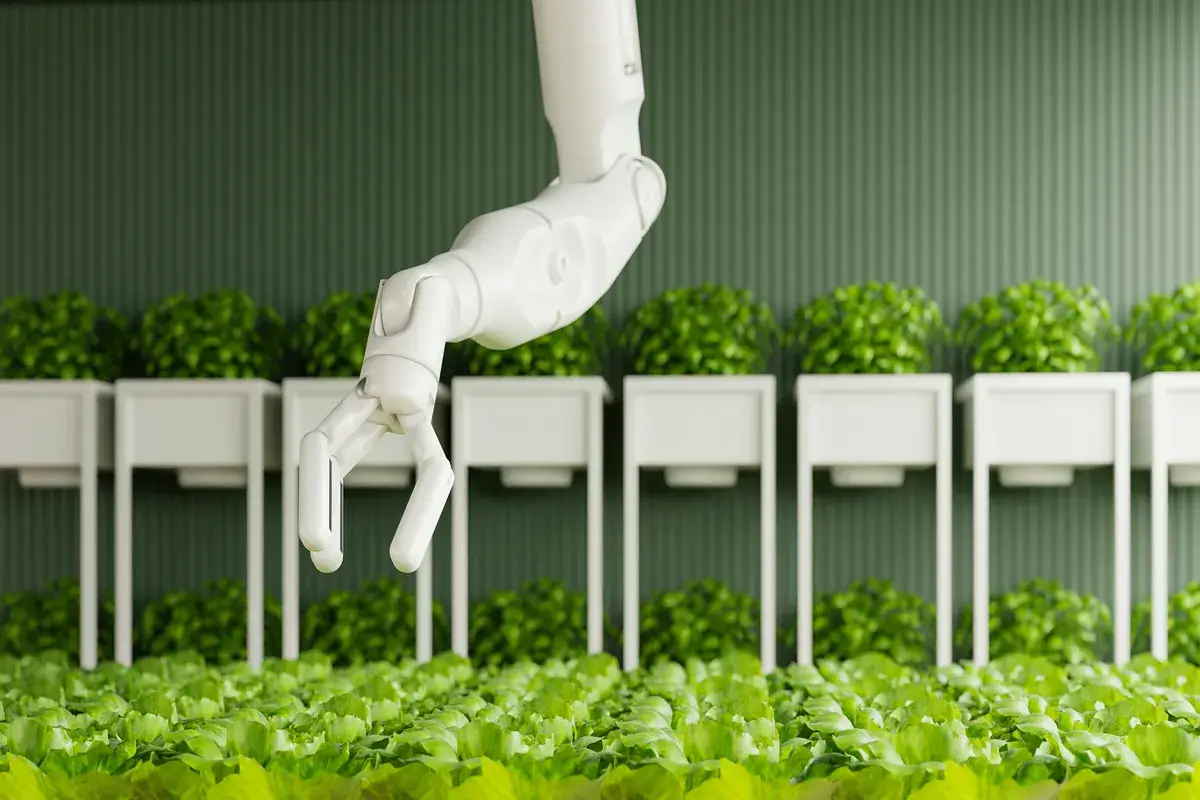
The global agricultural landscape is facing a quiet but critical crisis: the hands required to harvest the world’s food are disappearing. From aging populations in rural areas to shifting migration patterns, the labor gap is widening. However, a Silent Revolution is underway, powered by Artificial Intelligence (AI) and Robotics, transforming the farm from a labor-intensive site into a high-tech hub of efficiency.
The Automation of Precision
For decades, robotics in agriculture were limited to heavy machinery for grain crops. Today, the challenge is “specialty crops”—delicate fruits and vegetables that require a human touch. Modern AI has finally bridged that gap.
- Computer Vision & Harvesting: Using advanced sensors and deep learning, robotic harvesters can now identify the ripeness of a strawberry or a bell pepper with higher accuracy than a human eye. These machines can work 24/7 without fatigue, picking produce at the peak of nutrition.
- Autonomous Weeding: Instead of blanket herbicide spraying, AI-powered robots like “see-and-spray” systems identify weeds among crops in real-time. They can eliminate weeds using lasers or targeted micro-doses of chemicals, reducing labor costs and environmental impact simultaneously.
AI: The Brain Behind the Machine
Robotics provides the “body,” but AI provides the “brain.” Beyond physical tasks, AI is solving the labor crisis through predictive management:
- Labor Optimization: AI platforms analyze weather patterns and crop maturity to predict exactly when and where labor (human or robotic) will be needed, preventing wasted effort.
- Remote Monitoring: With AI-driven drones, a single operator can monitor thousands of acres. These drones detect nutrient deficiencies and pest infestations early, tasks that previously required dozens of scouts on foot.
From “Manual Labor” to “Tech Operation”
The shift to robotics isn’t just about replacing workers; it’s about redefining the agricultural career. As low-skill manual tasks are automated, the industry is creating a demand for a new type of worker: the Agricultural Technologist.
“The revolution isn’t about emptying the fields; it’s about filling them with smarter tools that allow us to produce more food with fewer resources and less physical strain.”
Facing the High-Tech Hurdles
The transition is not without friction. The primary barriers remain the high initial capital investment and the need for robust 5G or satellite connectivity in remote rural areas. However, as “Robotics-as-a-Service” (RaaS) models emerge—where farmers rent robots instead of buying them—the barrier to entry is falling, making this revolution accessible to more than just the industry giants.
SEO Metadata & Keywords
Meta Description: Explore how AI and robotics are solving the global agricultural labor shortage through autonomous harvesting, precision weeding, and predictive AI technology.
Keywords: Agricultural AI, farm robotics, labor shortage in agriculture, autonomous harvesters, AgTech revolution, precision farming, smart agriculture, robotic weeding, AI crop monitoring, future of farming
Would you like me to draft a comparison table showing the efficiency gains of robotic harvesting versus manual labor for your readers?