
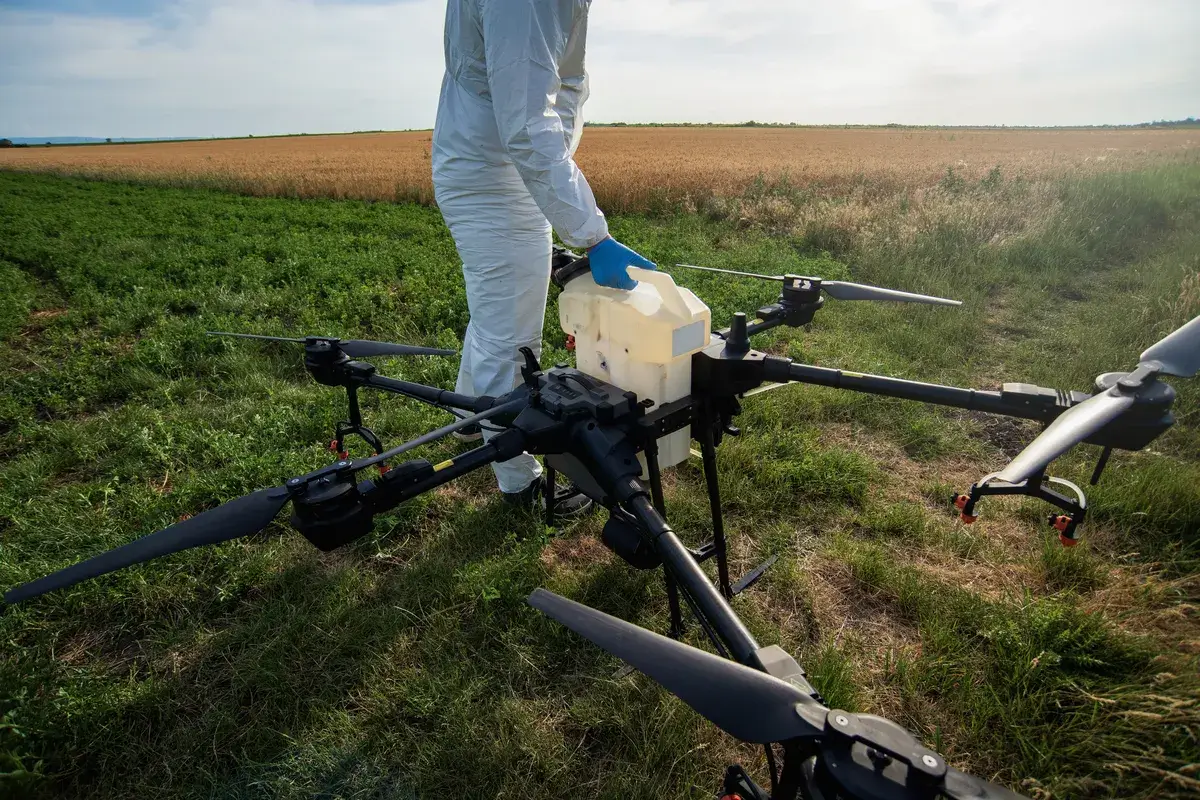
The image of a tractor spraying clouds of chemicals across a flat field is becoming a relic of the past. Today, the sky is where the most critical farming decisions are made. Agricultural drones (UAVs) have matured into autonomous powerhouses capable of managing crop health with a level of detail that was physically impossible just a decade ago.
1. Precision Spraying: Saving the Soil and the Wallet
Traditional spraying methods are often “blanket” operations—applying the same amount of chemical to every inch of land. Drones have flipped this script through Variable Rate Application (VRA).
- Targeted Delivery: Drones use GPS and AI-generated maps to apply pesticides or fertilizers only to the plants that need them. This can reduce chemical usage by up to 30-50%.+1
- Canopy Penetration: The downward thrust from a drone’s propellers (prop-wash) creates turbulence that pushes the spray deep into the crop canopy, coating the undersides of leaves where many pests hide.
- Zero Compaction: Unlike heavy machinery, drones don’t touch the ground. This prevents soil compaction, which can stunt root growth and reduce yields over time.+1
2. Advanced Monitoring: The “Eye in the Sky”
Drones do more than just carry tanks; they are advanced data collection platforms. Equipped with multispectral and thermal sensors, they provide a “check-up” for every plant.+1
- NDVI Mapping: By measuring how plants reflect infrared light, drones create health maps (NDVI) that highlight “stress zones” invisible to the human eye.
- Early Detection: In 2026, AI algorithms integrated into drones can identify the specific signature of a fungal outbreak or nitrogen deficiency weeks before a human scout would notice.
- Stand Counting: Drones can autonomously count every single plant in a field, giving farmers an exact 1:1 inventory of their expected harvest.
3. Versatility in Challenging Terrain
One of the biggest advantages of drones is their ability to work where tractors cannot.
- Steep Slopes: In vineyards or mountainous regions, drones can navigate inclines that would be dangerous for a tractor.
- Wet Soil: After heavy rain, a tractor would get stuck or ruin the soil structure. A drone can fly over the mud and apply emergency treatments immediately, saving the crop from rot.
The 2026 Shift: Swarm Intelligence
The most recent leap in drone technology is the use of “swarms.” Instead of a single drone, a fleet of 3 to 5 smaller drones works in coordination. While one drone maps the field to find pests, the others follow behind to spray the identified spots in real-time. This “detect-and-treat” workflow has cut labor time from days to mere hours.
Key Benefits at a Glance:
| Feature | Traditional Machinery | AI-Powered Drones |
| Chemical Waste | High (Blanket spraying) | Minimal (Targeted application) |
| Soil Health | High Compaction | Zero Compaction |
| Accessibility | Limited by terrain/mud | Total aerial access |
| Data Quality | Manual/Observational | Multispectral/Real-time |