
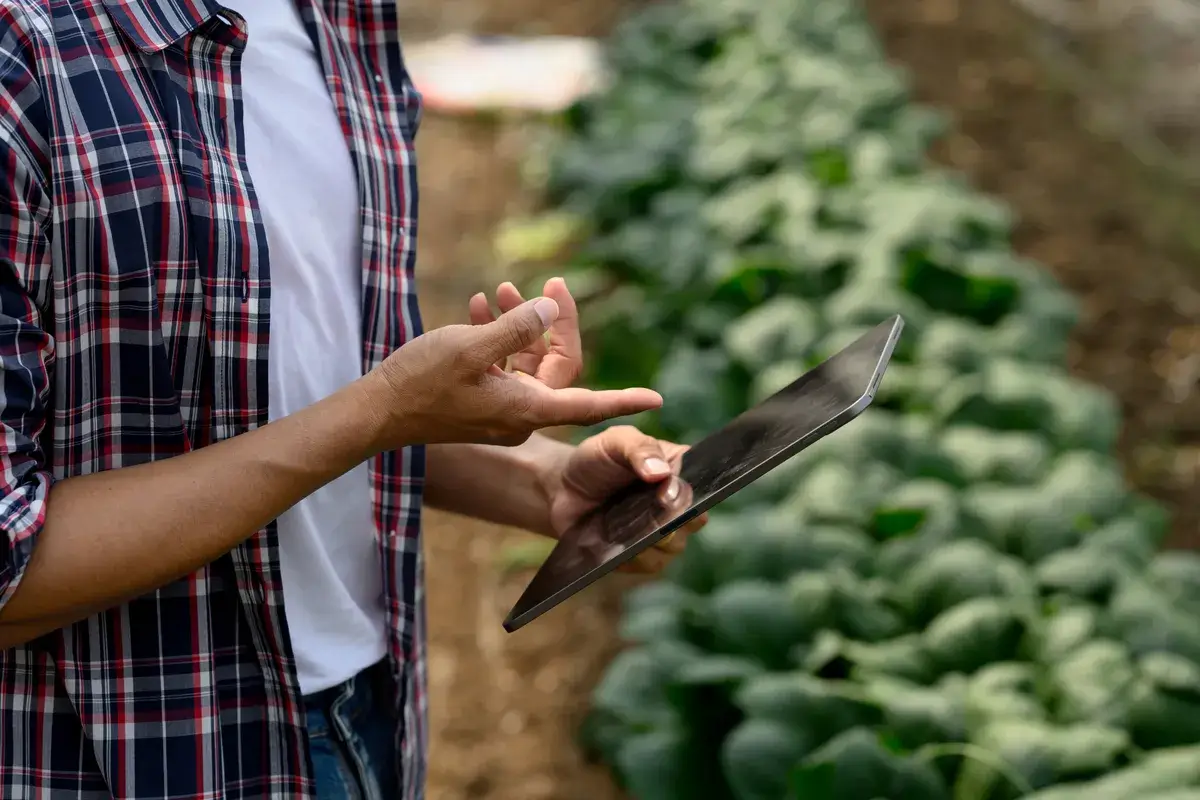
The global food system is facing a historic challenge. With a rising population and a shrinking amount of arable land, the pressure on farmers to produce more with less has never been higher. Enter Artificial Intelligence (I.A.). No longer a tool for the distant future, AI is currently revolutionizing agriculture by predicting crop yields with millimetric precision, transforming how we feed the planet.
The Evolution of Yield Forecasting
Traditionally, predicting how much a field would produce was a mix of historical records, intuition, and a bit of luck. Farmers relied on seasonal patterns that are now being disrupted by climate change.
AI changes the game by processing massive datasets that the human brain simply cannot correlate. By analyzing variables such as soil chemistry, moisture levels, and satellite imagery, AI provides a predictive roadmap for the growing season.
How AI Achieves “Pinpoint Accuracy”
The “magic” behind these predictions lies in the integration of several advanced technologies:
1. Machine Learning and Historical Data
AI algorithms ingest decades of weather patterns and historical yield data. By identifying “hidden” correlations, the system can predict how a specific seed variety will perform under specific stress conditions.
2. Hyper-Local Weather Intelligence
Standard weather reports aren’t enough for precision farming. AI-powered sensors in the field provide real-time data on:
- Micro-climates: Temperature shifts within different sections of the same farm.
- Evapotranspiration rates: Precisely how much water the plants are losing.
3. Satellite Imagery and Computer Vision
Using “Normalized Difference Vegetation Index” (NDVI) data, AI can “see” plant health before the human eye can. If a crop is lacking nitrogen or facing a pest infestation, the AI flags the exact coordinates, allowing for targeted intervention.
The Benefits: Why Accuracy Matters
Predicting the future isn’t just a party trick; it has massive economic and environmental implications:
- Resource Optimization: Farmers can apply fertilizer and water only where needed, reducing waste and runoff.
- Supply Chain Stability: If food processors know exactly how much grain will be harvested months in advance, market prices stabilize and food waste decreases.
- Climate Resilience: AI helps farmers choose the best planting windows to avoid incoming extreme weather events.
The Future of the AI-Driven Harvest
As we move toward Agriculture 5.0, the synergy between AI and robotics will deepen. We are looking at a future where autonomous tractors adjust their speed based on real-time yield predictions and where “smart seeds” are programmed to thrive based on AI-simulated climate models.
The goal is clear: zero hunger through total precision. By removing the guesswork from the harvest, AI is ensuring that our food security is no longer left to chance.