
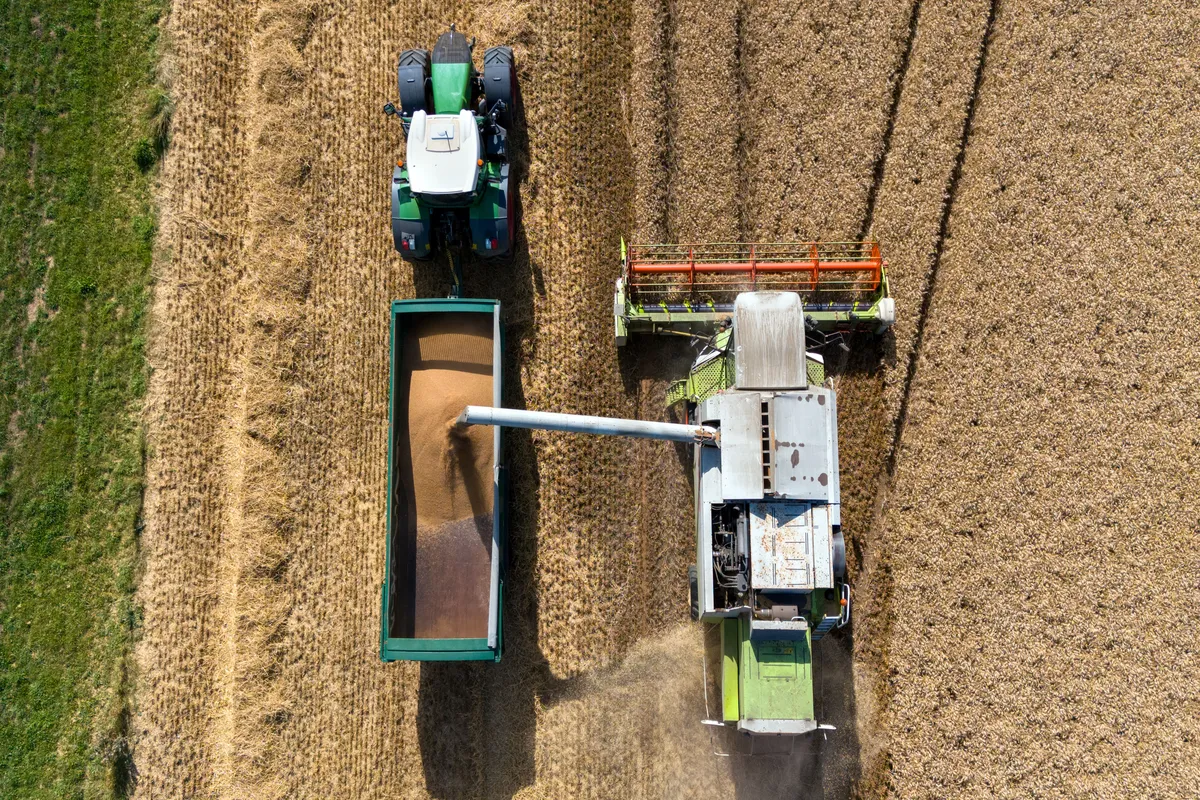
The image of a lone farmer on a tractor at sunrise is becoming a relic of the past. We are currently witnessing the transition from Mechanized Farming to Agricultural Robotics 2.0. We are no longer just talking about machines that help humans; we are talking about ecosystems where Artificial Intelligence (AI) makes the executive decisions.
But the trillion-dollar question remains: Is the global agricultural sector truly ready to hand over the keys to the kingdom to an algorithm?
The Pillars of the 100% Autonomous Farm
To reach a “hands-off” reality, the industry is scaling three specific technological pillars:
1. Swarm Robotics
Instead of one massive, expensive tractor, the future lies in “swarms” of smaller, autonomous robots. Companies like Horsch and AgXeed are developing units that work in tandem. If one breaks down, the others adjust their pathing to cover the gap.
- The Benefit: Reduced soil compaction and lower energy consumption.
2. Hyper-Spectral AI Vision
Agricultural Robotics 2.0 doesn’t just “see” a field; it analyzes it. Using sensors that detect light waves invisible to the human eye, AI can identify a nutrient deficiency or a pest outbreak days before a human scout could.
3. Edge Computing and 5G
For a farm to be 100% AI-managed, latency is the enemy. Robots need to process terabytes of data locally (Edge Computing) to make split-second decisions—like distinguishing a seedling from a weed—without waiting for a signal from a distant server.
The “Readiness” Gap: 3 Major Hurdles
While the technology is breathtaking, several “real-world” factors are slowing down the total AI takeover:
| Challenge | Impact on Adoption |
| Regulatory Frameworks | Who is liable if an autonomous robot wanders onto a public road? Laws are still catching up. |
| Connectivity Deserts | Many of the world’s most productive rural areas still lack the high-speed 5G required for real-time AI sync. |
| The “Black Box” Problem | Farmers are often hesitant to trust a system if they don’t understand why it decided to skip a harvest or increase irrigation. |
The Human-in-the-Loop Era
We may not see “zero-human” farms by 2030, but we will see the “Farm Manager as Data Scientist.” The physical labor is being automated, but the strategic oversight remains human.
The transition to 100% AI-managed farms isn’t a single event—it’s a gradual integration. We are moving from “smart” tools to “autonomous” systems that learn from every harvest, every drought, and every soil sample.
Are we ready? Technologically, we are 90% there. Economically and legally, we are still in the early stages. However, as labor shortages continue to plague the agricultural sector, the “luxury” of AI management is quickly becoming a “necessity” for survival.
The robots aren’t just coming; they are already in the field. The only question is how fast we are willing to let go of the steering wheel.